

Do you struggle with chronic absenteeism in your school or district? Chronic absenteeism has long been a concern for educators, but recent data suggests its impact is more profound than previously understood.
According to a recent article from K-12 Dive, the White House Council of Economic Advisers found that chronic absenteeism significantly contributed to recent declines in the National Assessment of Educational Progress (NAEP) scores. Specifically, absenteeism could account for 16-27% of the overall NAEP score declines in math and 36-45% in reading.
The reasons for student absenteeism vary, from declining social, emotional, or physical health to familial responsibilities. However, the overarching message is clear: for your students to recover from the disruptions of the pandemic, they need to be present in school.
The reasons for student absenteeism vary, from declining social, emotional, or physical health to family responsibilities. However, the overarching message is clear: for students to learn and thrive, they need to be present in school.
Understanding the Difference Between Chronic Absenteeism and Truancy
Early Intervention and Assessments
Early identification is one of the first steps in addressing chronic absenteeism in K-12 schools. Your school needs robust systems to monitor attendance and identify students at risk of becoming chronically absent. Regular assessments, such as universal screeners, can help you understand the root causes of absenteeism for individual students, whether academic, social, or health-related.
Multi-Tiered Systems of Support (MTSS)
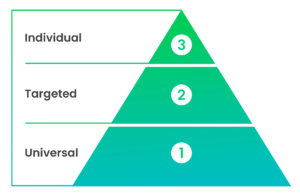
MTSS (Multi-Tiered Systems of Support) is a proactive approach that provides targeted student support based on individual needs. Using a tiered system of support helps your school offer general support to all students, more targeted interventions to those at risk, and intensive interventions to those facing significant challenges. This system ensures that students receive the right level of support at the right time, helping you address the cause of absenteeism before it escalates to jeopardizing a student’s academic performance.
Holistic Approaches to Student Well-being
Beyond academic support, consider the whole child, including addressing social-emotional needs, mental health, and physical well-being. Adopt programs that promote mindfulness, resilience, emotional intelligence, and student well-being to equip students with the tools they need to navigate challenges, reduce the likelihood of chronic absenteeism, and improve academic and social-emotional competencies.
While many strategies exist to address chronic absenteeism, leveraging online therapy and school-wide wellness solutions like eLuma can offer your school a specialized and practical approach.
When Outside Support Is Required
An end-to-end student services provider can help schools like yours tackle the challenge of chronic absenteeism with full-tiered coverage. A solution that provides services for Tiers 1, 2, and 3 ensures all students reach their full potential through comprehensive services based on your school’s unique needs.
Services to address chronic absenteeism include:
- Online Counseling & Behavior Support: Tailor support for students through mental health and behavioral health therapy.

- End-to-End Student Services Solutions: Comprehensive services address all aspects of student well-being and academic success, including universal screening to identify at-risk students and professional development to support staff with strategies for inside and outside the classroom.
- Reliable Clinicians & Providers: Access to a network of qualified teletherapists and counselors enables a hybrid approach to capacity challenges, filling gaps and supporting your in-school staff to meet student needs.
- Secure & Compliant Platform: Choosing a secure and compliant platform protects the privacy and safety of student data.
Take Action Today
The challenge of chronic absenteeism is significant, but with the right tools and strategies, you can ensure that every student has the opportunity to succeed. eLuma stands ready to support your district in this mission, providing the individual and school-based solutions necessary to address the root causes of absenteeism and promote student well-being.
Ready to build a brighter future for all students? Discover how our customized online therapy and school-wide wellness solutions can make a difference. Schedule your free consultation today and take the first step towards building brighter futures for your students.