

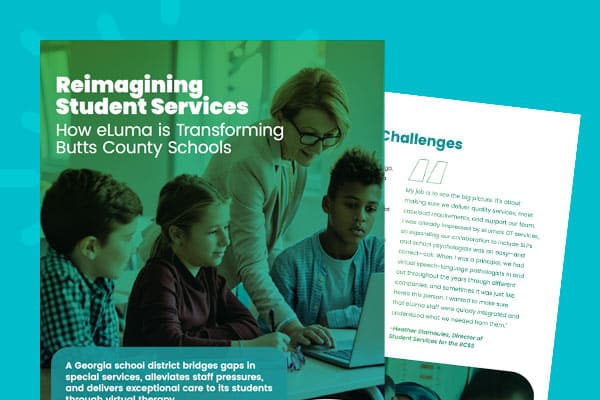
Case Study
Butts County School System Solves Overdue Re-Evaluations with eLuma
Overdue student re-evaluations dropped from 86 to 8 within the first year of expanded partnership
450 students with IEPs supported across a district of 3,500 students
Filled critical gaps in occupational therapy, speech-language pathology, and school psychology
Zero disruption to caseload continuity, even as staffing needs shifted
As schools nationwide grapple with the increased need for—and complexities of delivering—physical, occupational, and mental health services, virtual solutions have become a critical support system for many schools and districts.
In Jackson, Georgia, Heather Stamoules, Director of Student Services for the Butts County School System (BCSS), shares how partnering with eLuma has transformed her district’s approach to special services, easing staff and administrative pressures while ensuring exceptional care for all students.

About Butts County School System (BCSS)
BCSS is composed of five schools (three elementary, one middle, and one high school) with an enrollment of approximately 3,500 students. The district’s minority enrollment is 40%, with 58% of students eligible to participate in the federal free and reduced-price meal program.
BCSS reported steady academic progress in the 2023-2024 Georgia Milestones test scores, with growth in nine out of eleven tested areas. The district is committed to continual improvement and fosters community engagement, with regular updates and events for parents and stakeholders.
Addressing Key Challenges
When Stamoules took on her role two years ago, the district was already partnering with eLuma for occupational therapy. She noticed that a speech-language pathologist (SLP) was overwhelmed by a heavy workload, struggling to balance both evaluations and student sessions.
Evaluations and re-evaluations are required steps in determining a student’s eligibility for special education services and ensuring their needs are met over time. This challenge was impacting the district’s ability to meet caseload requirements and provide students with the support they needed in a timely manner.
Recognizing the strain the specialist was under, as well as the implications of being in noncompliance, Stamoules decided to research eLuma’s SLP and psychologist offerings.
“My job is to see the big picture. It’s about making sure we deliver quality services, meet caseload requirements, and support our team.
I was already impressed by eLuma’s OT services, so expanding our collaboration to include SLPs and school psychologists was an easy—and correct—call. “
Overcoming Perceptions
When it comes to virtual services, some parents initially expressed skepticism. However, eLuma’s professionals quickly dispelled concerns by providing exceptional service and participating actively in IEP meetings.
At the outset, Stamoules and her team carefully selected students who would benefit most from virtual services.
“So, some of our more severe and profound students with intellectual disabilities or attention difficulties— we know they’re going to need somebody right there. We make sure that we set the therapist up for success, as well as the students.”
Virtual services have also offered unexpected benefits. Many students often find online sessions engaging, with interactive tools and activities that keep them motivated.
For some, the virtual environment even reduces anxiety, making it easier for them to focus and participate.
Integrating Virtual Therapy Into Schools
Thoughtful onboarding has been key to the district’s success with eLuma.
“We set up virtual meet-and-greets with the school team before services begin,” Stamoules says, “That includes administrators, on-site staff, and even a paraprofessional to ensure everything flows smoothly.”
“It’s a hard thing to do—give up the students you’ve been serving for many years and say, ‘Okay, now you take care of them,” she continues.
“Sometimes parents of students with disabilities are not fans of virtual services, and so they’ll ask a lot of questions, and they just don’t think it’s going to be as good as in person. It was important that we got it right.”
eLuma’s virtual therapists are given access to the district’s platforms like its student information system and Georgia Online IEP, so they’re fully connected with students and staff— and to the data and information they need on their kids.
The logistics of virtual therapy are handled carefully: therapists coordinate with paraprofessionals, ensure proper setup for sessions, and stay in close contact with school teams to quickly address any issues.
With in-person paraprofessionals facilitating the sessions, students get personalized attention and can develop strong connections with eLuma staff.
One onsite SLP, who also serves as the Special Education team leader in the building, says, “Most of our students receiving virtual speech and language services have transitioned smoothly from in-person support.
I maintain regular communication with our eLuma SLP, and we collaborate effectively to manage and adjust student caseloads as needed. She also works seamlessly with our virtual facilitation paraprofessional for schedule updates, paperwork, and other logistics.”
“While teachers often come to me with questions, as I’m onsite, the overall feedback from both teachers and parents regarding the virtual therapy experience has been very positive.”
This collaborative approach has strengthened the bond between eLuma and the district.
“They’re not just a service provider; they’re part of our team.”
She credits regular communication, shared goals, and a commitment to student success for fostering a relationship built on trust and mutual respect. And BCSS’s partners at eLuma have nothing but praise for Stamoules and her staff.
“Heather is in her second year as director and is making a huge impact for her district, ensuring all students have access to quality therapy,” says Andrew Codding, Director of School Partnerships in the Southeast region of the U.S., at eLuma.
“Our communication is great, and BCSS is very organized and responsive, quickly and thoughtfully addressing any need for additional
services. We’ve built a close partnership, shown by Heather’s willingness to hang out with us at conferences!”
Looking at the Data
One of the district’s biggest wins with eLuma has been cutting down overdue student reevaluations.
“When I started, we had 86 overdue re-evaluations.”
“We have about 450 students with IEPs, and all of them are on three-year re-evaluation cycles,” continues Stamoules.
“Not all of them are going to require a full re-evaluation with the school psychologist, but the number was still high when factoring in students referred for initial evaluations.”
Evaluations and re-evaluations require careful work by qualified professionals to assess a student’s ongoing needs and determine if adjustments to their support plans are necessary.
With the additional support from eLuma’s therapists, that overdue number quickly dropped to just eight. This cleared the way for the district to stay compliant and focus on future needs, says Stamoules.
eLuma’s detailed reporting tools also help the district track student progress and make informed decisions. These insights not only help Stamoules manage her team better but also give parents confidence that their kids are getting the help they need.
Why Choose eLuma?
When asked why the district didn’t simply hire additional in-person staff, Stamoules points to challenges beyond funding.
“Post-COVID, there are more virtual platforms offering professionals greater career flexibility,” she explains.
“Finding in-person school psychologists, occupational therapists, or SLPs is incredibly challenging, especially in a small, rural district like ours. eLuma allows us to fill those gaps effectively.”
And quickly, adds Stamoules. “Anytime I’ve mentioned a need, we haven’t had to wait one or two months to hear, ‘We finally found someone for you.’
The process with eLuma has been, ‘You just tell us what you need, and we can get the ball rolling. Here, we’ve got someone lined up.’”
Additionally, the partnership with eLuma ensures continuity of services. Unlike in-person hires who may leave mid-year, eLuma’s contract structure provides stability, allowing districts to plan with greater confidence.
This consistency is particularly important for students who thrive on routine and familiarity.
Looking Ahead
Stamoules envisions maintaining and possibly expanding eLuma’s services to meet her district’s evolving needs.
“We’ll always have to evaluate our budget, but compliance and quality of service will remain top priorities. eLuma has been a big contributor to our success on both fronts.”
Stamoules is also exploring ways to further integrate eLuma into professional development for her staff. Virtual therapists can offer valuable insights and strategies, creating a collaborative learning environment that benefits the entire team.
Advice for Other Districts
For districts considering virtual service providers like eLuma, Stamoules advises starting with a clear understanding of state regulations and current needs.
“Superintendents will always want to know where funding will come from and why it’s needed,” she says.
By leveraging IDEA and Medicaid funding, Butts County has minimized local financial burdens while enhancing student services. eLuma’s services have proven invaluable to BCSS, by addressing critical service gaps and by easing the workload for on-site staff.
“It’s about finding a balance—ensuring our students get the best care while supporting the professionals who serve them.”
With eLuma as a partner, districts can focus on what truly matters: the well-being and success of their students–and staff. The combination of innovative technology, skilled professionals, and a commitment to student outcomes makes eLuma a trusted ally in the everevolving landscape of education.